Simon Bouriat
Head of Science at Augura Space. I work on machine learning for the space environment, from solar wind/magnetosphere coupling to operational space weather. I am also involved in human spaceflight, through analog missions and human factors training.
Paris, France
Now
I am Head of Science at Augura Space, a Paris-based startup providing space weather monitoring, nowcasting and forecasting to satellite operators. I define the scientific roadmap and the model validation framework, supervise two research scientists, and work on the radiation environment, atmospheric drag and ionospheric effects on GNSS.
I am also following the Human Spaceflight Certificate at the SpaceFlight Institute in Toulouse, and finishing a paper on reinforcement learning for controlled satellite deorbit with the Space Advanced Concepts Lab at ISAE-SUPAERO.
Research
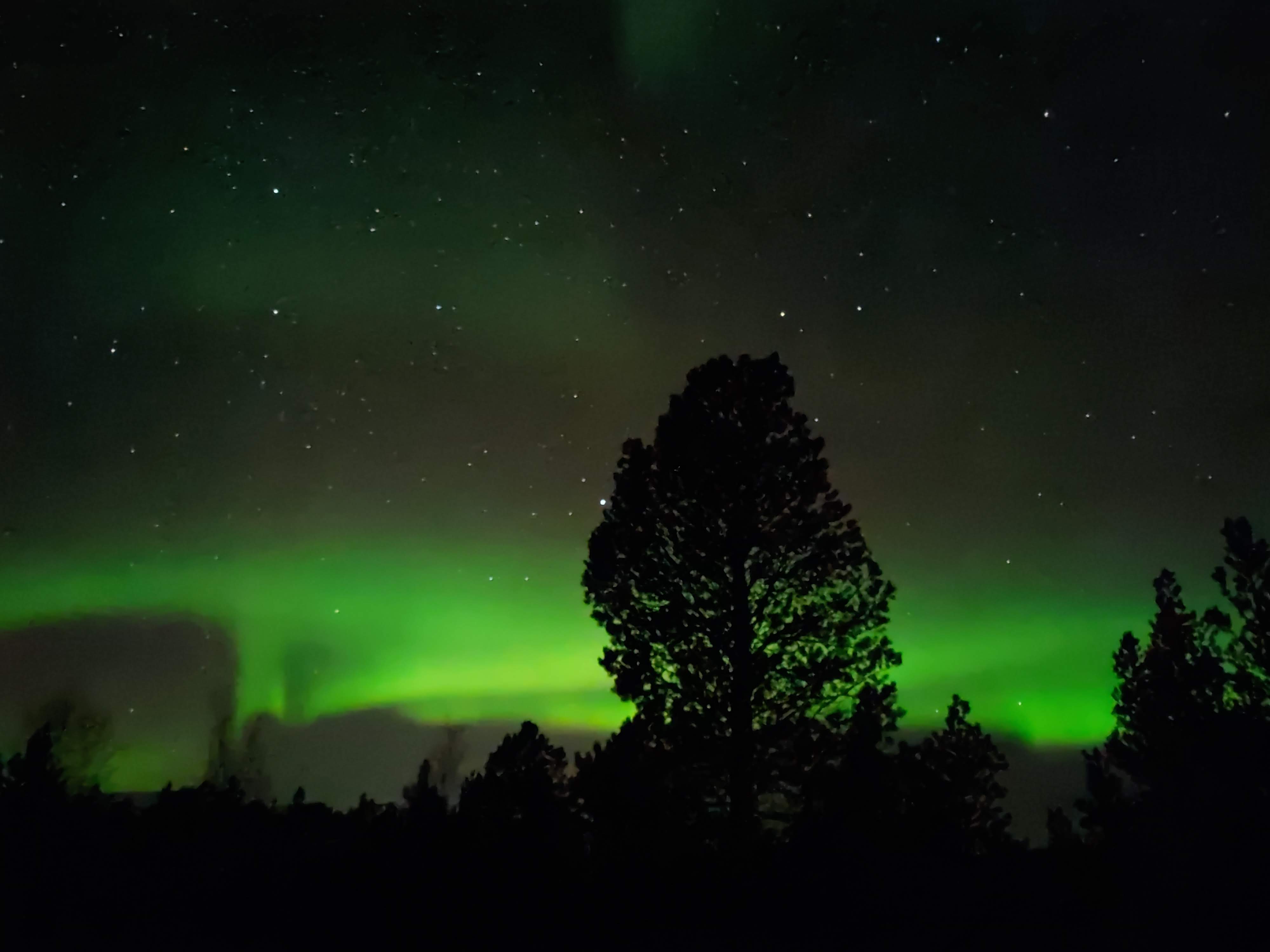
My PhD (Université Grenoble Alpes, IPAG and GIPSA-Lab) focused on low-energy electrons precipitating into the auroral regions: they produce the aurora and affect spacecraft in low Earth orbit. I built deep learning models, including temporal convolutional networks with integrated gradients for interpretability, to nowcast and forecast the electron energy fluxes measured by DMSP satellites from ACE and DSCOVR solar wind data. I have since worked on orbital simulation and decision-making for autonomous spacecraft, and now on operational space weather.
Read my PhD thesisShort bio
PhD, space physics & machine learning
Université Grenoble Alpes · 2020-2023
MSc, aerospace engineering
ISAE-SUPAERO · 2015-2019
MRes, astrophysics
Université Toulouse III · 2018-2019
MSc, philosophy of science
London School of Economics · 2017-2018
In 2019 I joined NASA Goddard's Observational Cosmology Lab to build a Bayesian model validation framework, using the James Webb Space Telescope as a case study. I then spent five years at SpaceAble as space weather analyst and data scientist, where I created the WISDM project and coordinated the machine learning team, while completing a CIFRE PhD. In 2025-2026 I was a postdoctoral researcher at ISAE-SUPAERO and a flight dynamics simulation engineer at AIKO.